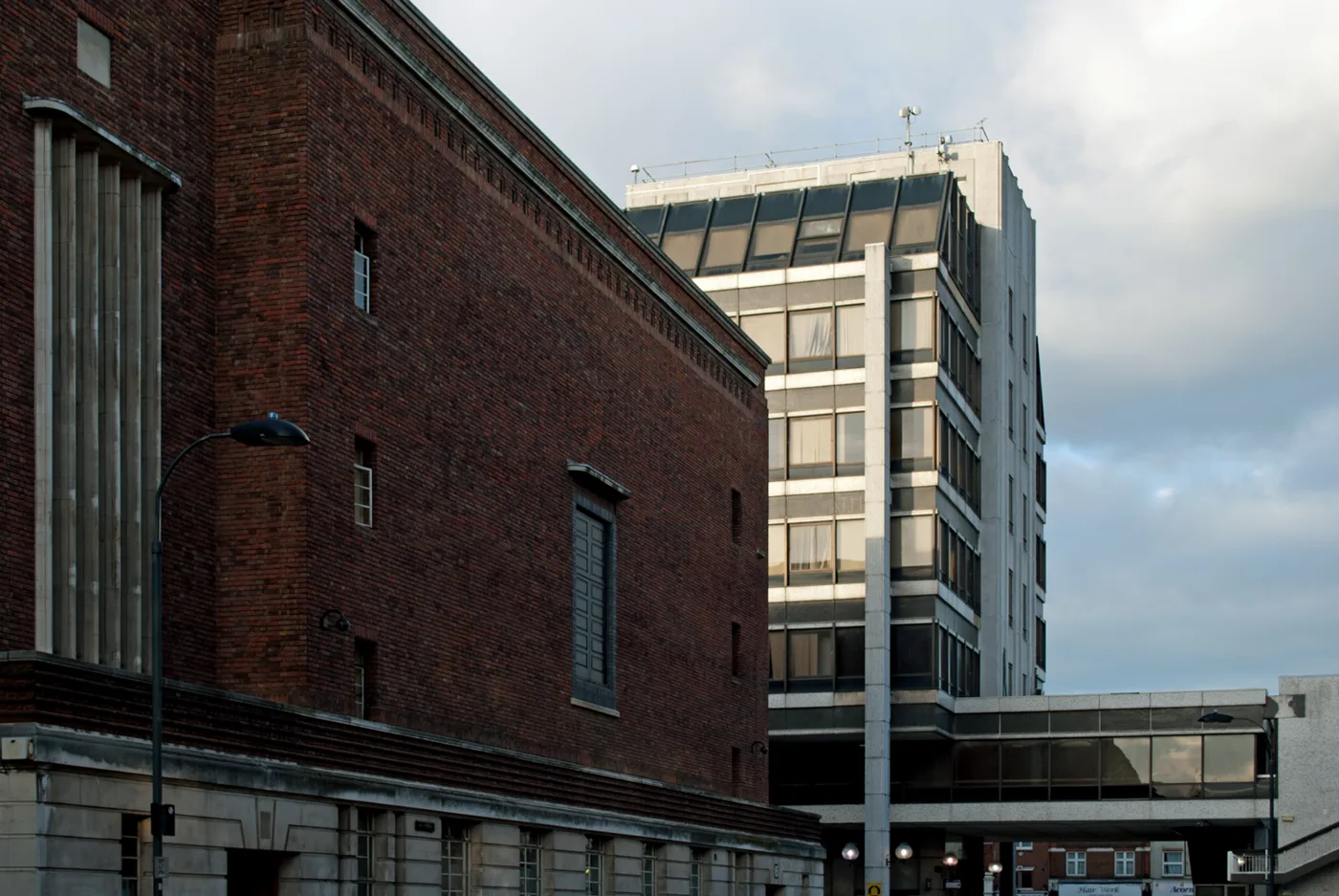

The council says Government funding changes could cost it up to 40% of its £222m budget. From April 2027 no referendum limit applies to its council tax.
Hammersmith and Fulham Council has warned residents that their council tax is likely to rise sharply. The Government’s new funding formula could cost the council the equivalent of as much as 40 per cent of its £222 million annual budget, it says.
The warning came on Tuesday in a statement from Cllr Rowan Ree, the Cabinet Member for Finance and Reform. It is the first time the council has told residents directly what the change could mean for their bills. It says it will “soon ask for the views of all council taxpayers”.
Updated 14 October: the council has now published three scenarios, raising its share of a Band D bill by 100, 125 or 150 per cent in 2027/28, a total bill of up to £3,058.54. Residents are asked for views from 19 October to 15 November. Full story.
What the council says
Cllr Ree’s statement makes these points:
- the Government’s “Fair Funding” formula moves money away from central London councils to other parts of the country
- the reduction “could be equivalent to losing as much as 40% of our total annual budget of £222million”
- the council has challenged the change with its three MPs, but “the likelihood remains” that it goes ahead
- efficiency savings “alone will not be enough to close this budget gap”, so the council “must look at all our options”
- the council does not support the Government’s aim of bringing low council tax areas up to the national average
He also says the Government’s grant to the borough has already been cut by 54 per cent in real terms since 2010.
The statement does not say how big a rise the council has in mind, or when the consultation will open.
Why the cap is coming off
Every council in England normally needs a local referendum to raise council tax by more than a set limit, usually 4.99 per cent a year for boroughs like this one. That limit is being lifted here.
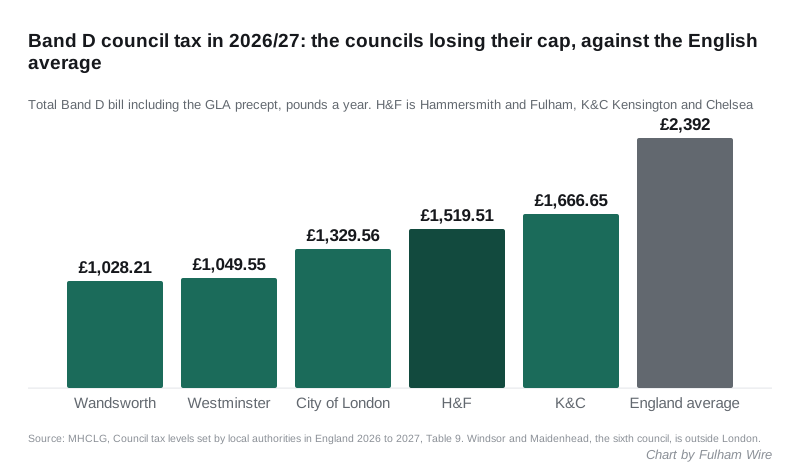
The Government’s provisional finance settlement proposes “not setting referendum principles for 6 authorities in 2027-28 and 2028-29”. It names them as the City of London, Hammersmith and Fulham, Kensington and Chelsea, Wandsworth, Westminster, and Windsor and Maidenhead.
The Government’s reasoning is in the same document. It says Band D taxpayers in those six places “are paying between £450 and £1280 less than the average in England”. It also says:
- “Decisions on council tax levels are a matter for local authorities.”
- the GLA part of the bill stays capped every year
- it expects all six councils “to continue to support vulnerable taxpayers irrespective of the decisions taken”
In plain terms, from April 2027 the size of the council’s share of your bill is a decision for councillors, with no referendum limit. The City Hall share is not affected.
Where the borough starts from
A Band D home in the borough pays £1,519.51 this year. Of that, £1,009.00 is the council’s share and £510.51 goes to the Greater London Authority. Our Fulham council tax bands page has every band.
The council’s statement calls this “the 3rd lowest council tax in England”. The Government’s own table for 2026-27 puts it fourth, behind Wandsworth, Westminster and the City of London. The average Band D bill across England is £2,392, about £870 more than here.
What Wandsworth has already planned
Wandsworth, over the river, is the only one of the six to have published a figure so far. Its Spending Review report plans to take its own share of a Band D bill from £510 to £1,468 in 2027/28. That would make the total Band D bill £1,978, up £958 or 94 per cent, in a single year.
The 94 per cent is the whole bill. Wandsworth’s own share would rise by about 188 per cent, the figure H&F quotes, because the GLA half is assumed not to move. H&F’s statement also says Westminster has warned of rises of as much as 200 per cent. We have not seen that figure in a Westminster document.
None of that is a forecast for this borough. H&F starts from a higher bill than Wandsworth, and it has not said what it plans.
The money is already tight
The warning lands on a council that is already over budget this year. Its own monitoring report forecast a £14.4 million overspend for 2026/27, driven mostly by adult social care and bed and breakfast placements for homeless families.
What happens next
The dates that are fixed so far come from the council’s own key decisions list:
- resident engagement on the budget and council tax runs from 19 October to 15 November
- Cabinet is due to decide the council tax support scheme for 2027/28 on 18 January 2027, the scheme that reduces bills for low-income households
- the 2027/28 budget and council tax are set early next year, for bills from April 2027
What it means for you
- Nothing changes on this year’s bill. The cap comes off from April 2027.
- Have your say when the consultation opens. The council says it will ask every council taxpayer. We will report the dates when they are published.
- If you are on a low income, watch the support scheme decision in January. It decides how much help you get with the bill, whatever the rise.
- Check your band is right through the Valuation Office Agency. A band that is too high costs more as the bill grows.
Sources
- H&F Council, “Changes to Government funding affecting your council tax”, 29 September 2026, for every quote from the council, the 40 per cent and £222 million figures, the 54 per cent real-terms cut and the planned consultation.
- MHCLG, provisional local government finance settlement 2026 to 2027, paragraphs 4.2.4 to 4.2.6, for the six councils, the lifted referendum principles and the Government’s quotes.
- MHCLG, council tax levels 2026 to 2027, Table 9, for every Band D figure in the chart and the English average.
- Wandsworth Council, Spending Review report for Wandsworth’s 2027/28 plan.
- H&F Council, Council Tax Support Scheme 2027/28, key decision due 18 January 2027.
Have your say