
Twenty-four fires in H&F council homes last year and no deaths, but fire risk assessments have missed the 100 per cent target every month since August 2025.
There were 24 fires in Hammersmith and Fulham council homes in the year to March 2026 and nobody died in any of them. That figure sits inside the annual housing safety compliance report going to Cabinet on Monday 14 September.
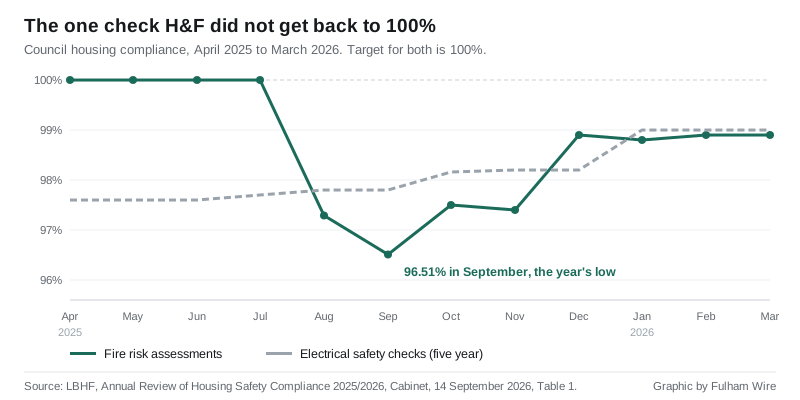
The same report shows one safety check that has not hit its target for eight months running. Fire risk assessments were at 100 per cent from April to July 2025. They fell to 96.51 per cent in September and were still at 98.9 per cent in March 2026.
The council blames a shortage of qualified assessors and problems with a contractor. It says a new contractor has been appointed and an in-house fire risk assessor recruited, and that it is “on track to be at 100 per cent in the next few months”.
The six checks, and where they stand
The council measures six core areas plus carbon monoxide detectors. These are the figures for March 2026, the last month in the report. The target for every one of them is 100 per cent.
- Gas safety checks: 100 per cent. A new contractor, Themoserv, started in August 2025. The independent audit gave substantial assurance, the highest grade available.
- Fire risk assessments: 98.9 per cent. The only measure that ended the year short.
- Electrical safety checks: 99 per cent. Wiring is tested every five years. This one started the year at 97.6 per cent and climbed.
- Asbestos checks: 100 per cent. These cover communal areas.
- Water safety checks: 100 per cent. There are 371 legionella risk assessments in place.
- Lift safety checks: 100 per cent. Lift availability was 98.3 per cent in March.
- Carbon monoxide detectors: 100 per cent. Every property has one.
Independent auditors rated gas as substantial assurance, and electrical, fire and asbestos as satisfactory. Lifts were the outlier: the audit gave only limited assurance that the right controls were in place. The council responded by wiring in access to third-party inspection data and generating weekly defect reports, and says the auditor is now satisfied.
There are 1,335 fire risk assessment actions open across the stock, measured on 10 April 2026. Of those, 24 medium-priority and 72 low-priority actions are overdue. None of the urgent Priority 1 actions is overdue. The report states there is no risk to residents from the outstanding actions.
Sprinklers in 380 West Kensington flats
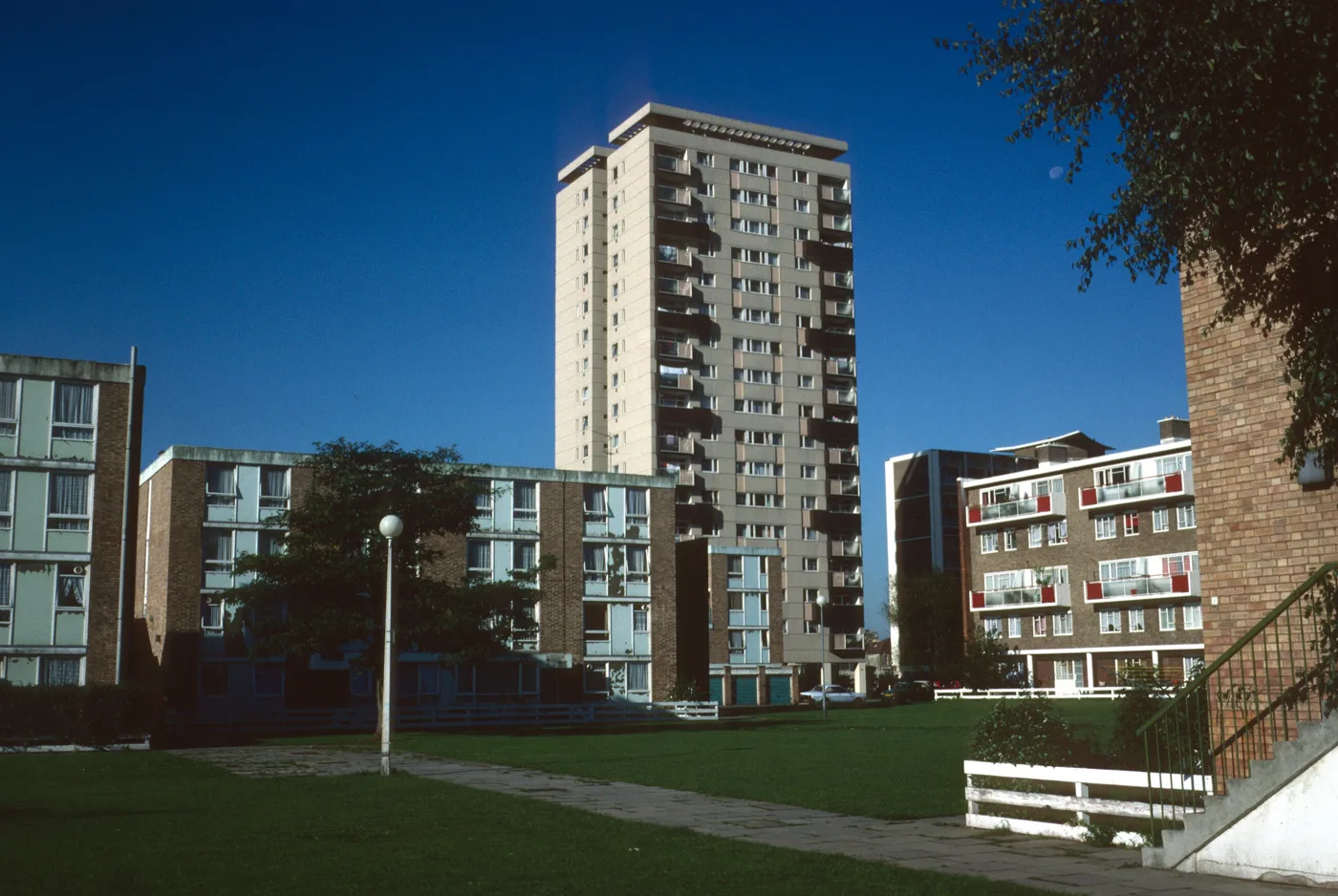
The five West Kensington towers, Churchward, Lickey, Fairburn, Sharnbrook and Desborough, have had sprinklers and fire evacuation systems fitted across 380 homes. The report puts completion at the end of July 2026 with commissioning due to go live in August. That takes the borough close to 1,000 council homes with sprinklers.
At Cheesemans, a bespoke system serving each of the block’s 59 flats has reached the end of its life. A pilot has been run and the council is procuring a contractor, with works expected to start by September 2026.
Elsewhere in the stock the council reports upgrading more than 6,000 fire doors to date, and in the last two years installing over 3,000 new fuse boxes and upgrading more than 8,000 fire detectors. It puts its total spending on the existing housing stock at around £1 million a week.
The regulator gave the highest grade
The Regulator of Social Housing inspected H&F’s housing between November 2025 and January 2026 and published its regulatory judgement on 13 May 2026. It handed down a C1 grade, the top of the four-point consumer standards scale, meaning the council is delivering the outcomes of the standards.
The council was also named as an example of good practice in the government’s residential Personal Emergency Evacuation Plans guidance, published on 2 December 2025. The accompanying Fire Safety (Residential Evacuation Plans) Regulations 2025 came into force in April 2026. Excluding sheltered housing, the council recorded 533 person-centred fire risk assessments and 325 evacuation plans over the year.
Higher-risk buildings and what happens next
The council has 49 higher-risk buildings registered with the Building Safety Regulator. After it submitted its safety cases, the regulator made a legal request for more information about structural elements. The council has commissioned intrusive surveys of beams, columns and other parts of those buildings to prove they can resist fire.
- 26 of those surveys are finished. The remaining 23 are scheduled.
- A Gateway 2 application covering Charecroft is due to go to the regulator in September 2026.
- The regulator’s assessment time has come down from 12 months to nine, though the report notes its resources are weighted towards new build, which slows existing schemes nationally.
The Remediation Bill, trailed in the King’s Speech, is expected to become law in 2026 or 2027. Under the proposals, higher-risk buildings needing external cladding remediation would have to be finished by 2029, and all residential buildings over 11 metres by 2031.
Asbestos, walls and playgrounds
Three other findings in the report are worth pulling out.
- The proactive asbestos survey of homes has reached 83.5 per cent of the domestic stock, up from 83.01 per cent, with a target of 100 per cent by September 2027. One potential reportable asbestos incident occurred during the year. Reassurance air tests confirmed no fibre was released above minimum legal limits.
- A defective boundary wall at Winthrop House in White City was made safe and taken down. Balcony walls at Mackay House partially collapsed, were made safe and then structurally strengthened. A boundary wall between the Peabody Estate and Queen Caroline was repaired.
- The council counts 62 play sites on housing land. February’s quarterly inspections found none at high risk, 27 at medium risk and 35 at low risk.
The report also records 1,536 households in temporary accommodation at the end of March 2026. That includes 490 in bed and breakfast or nightly paid rooms and 472 in privately leased properties the council repairs itself.
What it means for you
If you rent from the council, the practical points are these.
- Let the electrician in. The 1 per cent of homes still without a current five-year electrical certificate is being chased through tenant engagement and, where necessary, enforcement. If you have missed an appointment, ringing the council to rebook is the faster route than waiting to be chased.
- A free fire safety check is available. The Fire Safety Plus service checks tenants’ and leaseholders’ electrical goods, including tumble dryers and fridges. It carried out 198 inspections and checked 854 items last year, so it is not oversubscribed.
- Ask for an evacuation plan if you need one. The council sends an annual letter offering personal emergency evacuation plans and person-centred fire risk assessments every December. You do not have to wait for the letter to ask.
- Cabinet is a public meeting. It sits at 7pm on Monday 14 September in the Copper Suite at the Clockwork Building, 45 Beavor Lane, W6 9AR. The full agenda and papers are published in advance.
Council housing is paid for through the Housing Revenue Account, which is kept separate from the general fund that council tax feeds. Cabinet is reviewing that general fund budget at the same meeting.
Have your say