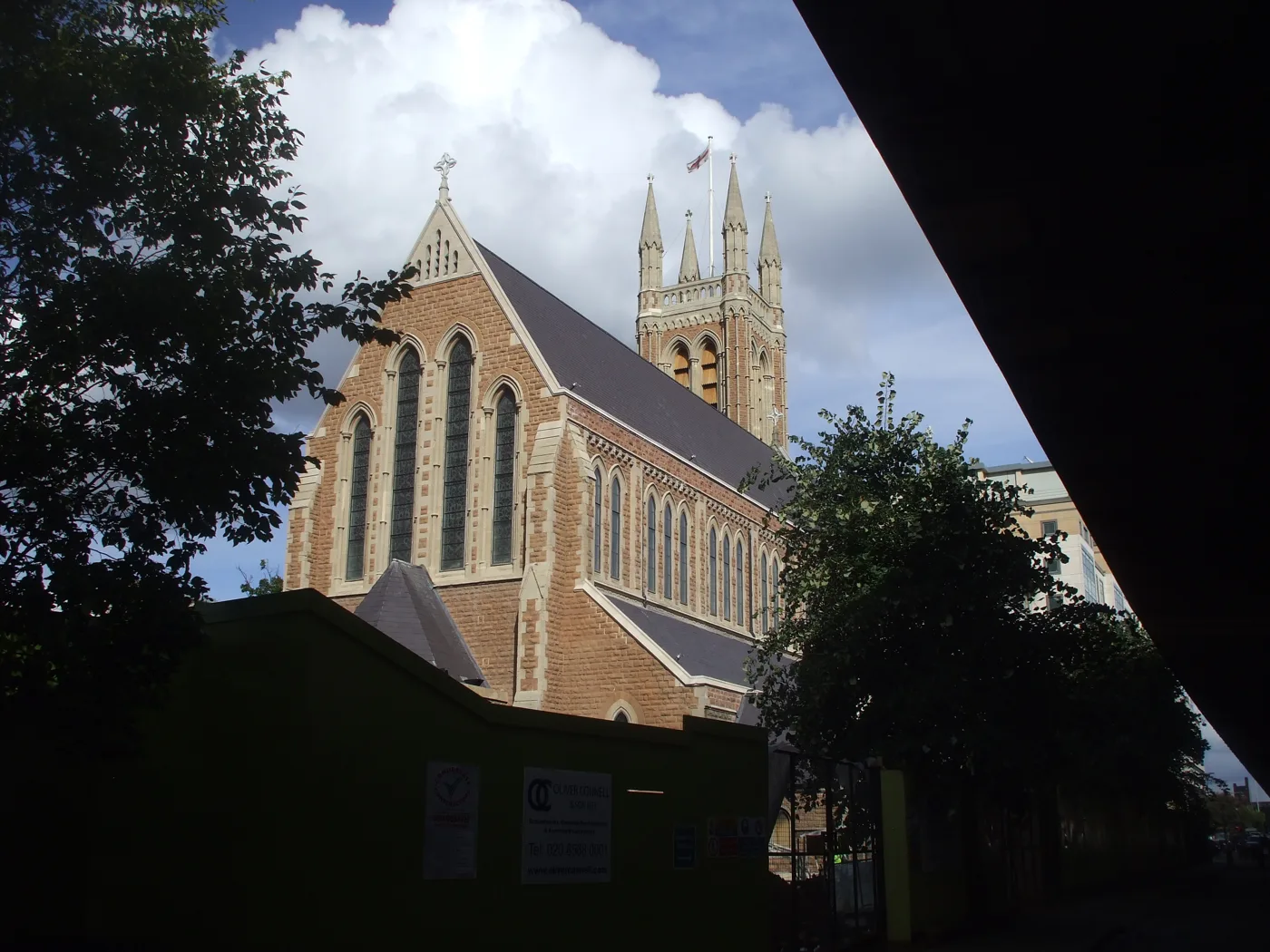

An inspector has approved a 14-storey block of 179 student rooms at 2 Queen Caroline Street, Hammersmith. He found it would harm the setting of St Paul's Church.
A 14-storey block of 179 student rooms can be built at 2 Queen Caroline Street, beside Hammersmith Broadway. A government planning inspector allowed the appeal on 26 November.
The inspector, Stuart Willis, found the tower would cause “moderate harm” to the setting of St Paul’s Church, which is listed Grade II*. He ruled that the benefits of the scheme outweighed that harm. The full reasons are in the appeal decision published by the Planning Inspectorate.
What was approved
The applicant is Royal London Mutual Insurance Society. Its plans, council reference 2024/03210/FUL, replace the existing building on the site. The decision allows:
- demolition of the existing building
- a 14-storey building with a basement
- 179 purpose-built student rooms, including some affordable rooms
- community space and a cafe on the ground floor
- a roof terrace on level 12
- cycle parking
Work must start within three years of the decision.
Why it went to appeal
Hammersmith and Fulham Council did not decide the application within the legal time limit. Royal London appealed on those grounds, known as non-determination.
During the appeal, the two sides signed a Section 106 agreement covering the points they had disagreed on. The inspector’s letter says the council then confirmed it “no longer opposed the development”. The case was decided on written evidence, with a site visit on 27 October.
The church tower
That left one main issue: the effect on the historic buildings around the site. The block would sit in the Hammersmith Broadway Conservation Area, close to St Paul’s.
The inspector wrote that the new building would be “of a similar height to the church tower” and far closer to it than other tall buildings nearby. “The appeal building would lessen its landmark status by competing with the scale of the church tower,” he wrote.
His findings on the listed buildings and conservation areas were:
| Building or area | Harm found |
|---|---|
| St Paul’s Church (Grade II*) | Moderate harm to its setting |
| Hammersmith Broadway Conservation Area | Lower end of the scale |
| Hammersmith Bridge (Grade II*) | Very lower end of the scale |
| The Mall Conservation Area and the listed houses on Lower Mall | Very lower end of the scale |
| The four listed tombs in St Paul’s churchyard | No harm |
| Bradmore House and the Hop Poles pub | No harm |
| The former Odeon cinema, the Sacred Heart convent, Hammersmith Fire Station, the Swan and the George | No harm |
He gave “substantial weight” to the new student rooms, to reusing a site he called “vacant and underutilised” and to the community space. He concluded the benefits outweighed the harm, both building by building and taken together.
Four payments ruled out
The Section 106 agreement secures a list of obligations. The inspector ruled that four of the payments in it, or asked for during the appeal, failed the legal tests and could not count:
- a public realm and community safety contribution, because no specific harm from the scheme was shown
- a cycle training and maintenance contribution
- money for cycle hire docking stations, requested by Transport for London and the Greater London Authority
- an NHS contribution towards nearby GP surgeries, because the evidence showed the surgeries have capacity
The obligations that do stand include:
- the community space, let at a peppercorn rent
- the number, type and management of the affordable student rooms
- a carbon offset payment and other energy payments
- employment, skills and local procurement contributions
- highway works around the building, including a hub on Black’s Road for hire e-bikes and e-scooters
- monitoring fees for the construction, travel and delivery plans
What it means for you
Students in the block will not be able to get resident or business parking permits. The agreement exempts Blue Badge holders. The inspector said this would stop extra pressure on the controlled parking zone.
For neighbours, the daylight study found one set of glazed doors to a terrace at 3 to 7 Black’s Road would lose light below the Building Research Establishment guidelines. The inspector judged the room would still get enough light because it has another window. The effect on the solar panels at the Irish Cultural Centre was “only marginally above the recommended levels”, he wrote.
Conditions on the permission cover construction logistics, noise, air quality, drainage and a student management plan. Samples of the outside materials must be agreed with the council.
Have your say