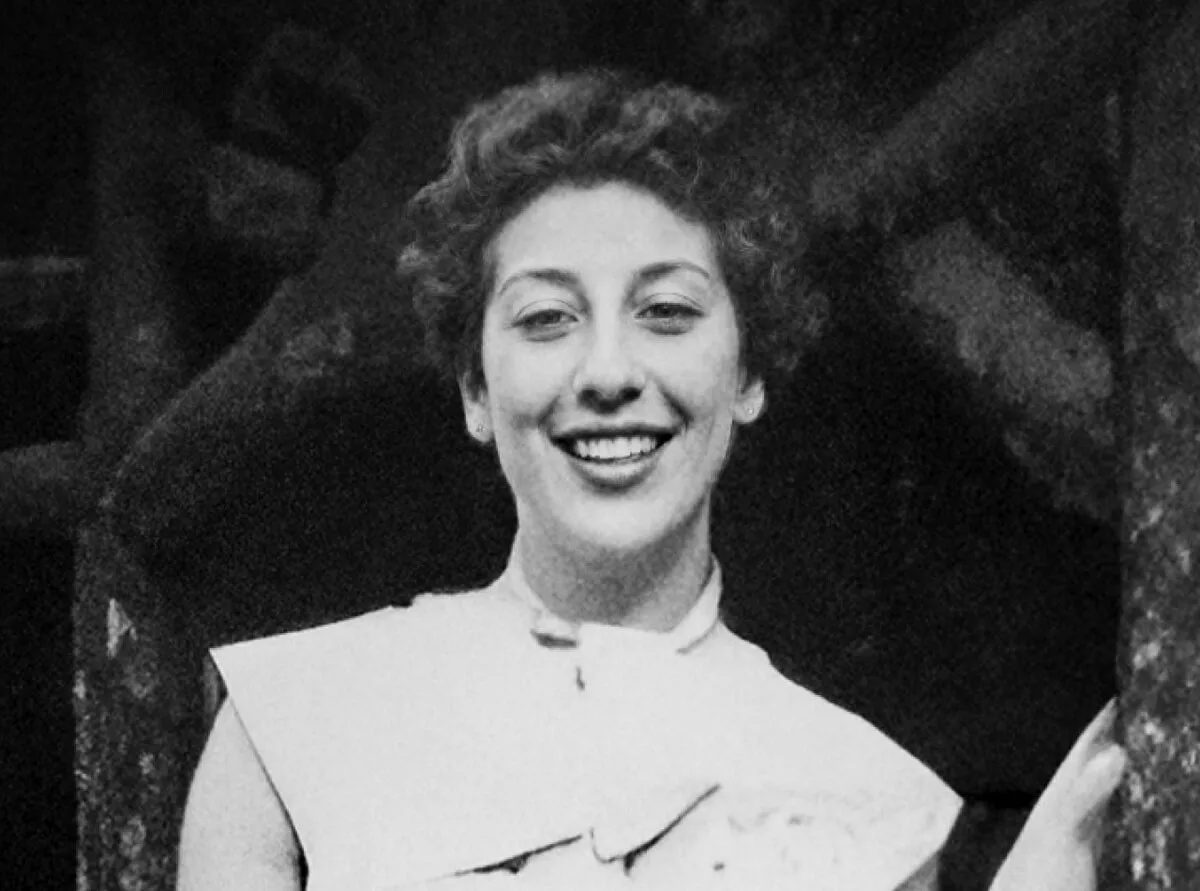

The world's first office computer ran its first job in Hammersmith Road 75 years ago this month. Gloria Guy, 90, of Fulham, worked on it as a teenager.
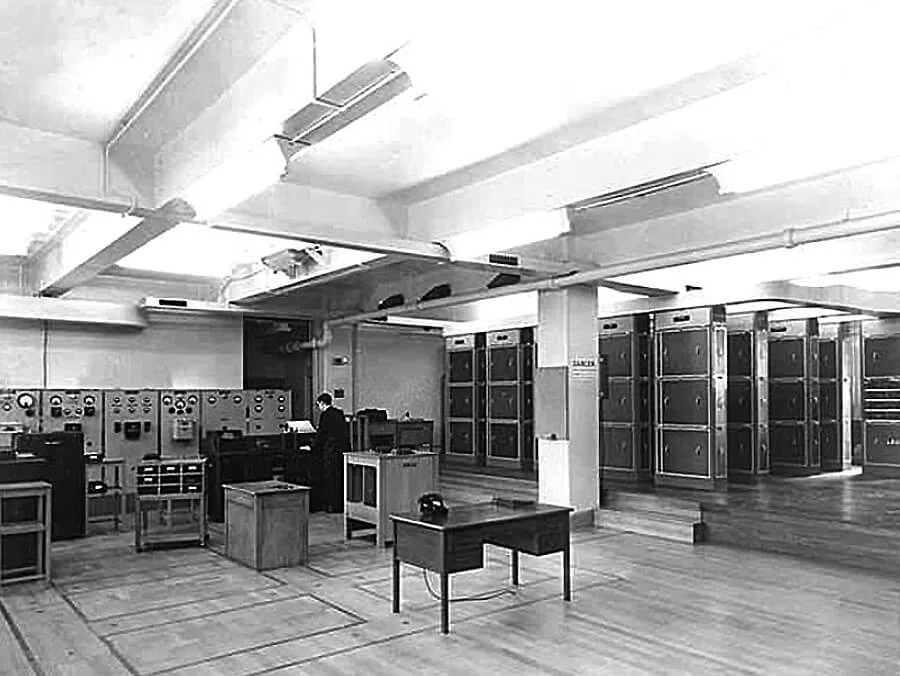
The world’s first office computer made its first calculation 75 years ago this month, in a room above a food factory in Hammersmith Road. The machine was Leo, the Lyons Electronic Office, and it ran at Cadby Hall, the Lyons teashop company’s headquarters beside Olympia.
Hammersmith and Fulham Council marked the anniversary on 20 November with the memories of one of its early staff. Gloria Guy is 90 and has lived in Fulham all her life.
Overview
- What: Leo, the first computer built to run an ordinary business’s office work.
- Where: Cadby Hall, Hammersmith Road, near Olympia. The building was demolished in the 1980s.
- When: the council says Leo made its first calculation at 2.35pm on 30 November 1951.
- Who remembers it: Gloria Guy, 90, a Fulham resident who joined Lyons at 16.
A £3-a-week junior
Gloria left school at 15. At 16 she joined the offices of J. Lyons, which ran a chain of 253 teashops, on £3 a week. Her mother also worked for the firm, on the conveyor belt sorting sultanas and almonds.
“These days I’d be called a data entry clerk,” she told the council.
She first counted up bills from the Lyons corner houses, then learned a comptometer, an adding machine worked with both hands. The new machine in the office next door caught her eye, and she moved across to Leo.
“I was purely typing numbers, working out the hourly rates of the people in the swiss roll department,” she said. Her typing punched holes in paper tape, which was checked and then fed into the computer.
“I had no idea I was working on a piece of history.”
What Leo was
According to the council’s account, the machine:
- had 6,000 valves and filled a room of 2,500 square feet
- held the equivalent of just 2KB of memory
- could run only one program at a time
- entered service in 1951, and updated versions ran until 1965
Before Leo, big organisations kept teams of clerks for order processing, invoicing, stock control and payroll. Leo did that work by machine.
One early job was working out the distances between 4,000 railway stations and the fares to charge. The council says the task was expected to take 50 people five years. Leo did it in 18 months.
Leo computers went on to be installed at Ford, British Oxygen, the Met Office, the Ministry of Pensions, Heinz and the Royal Bank of Scotland. In February 1951 a young Princess Elizabeth was shown the machine running a test program.
“Time to recognise” Leo
Gloria now sits on the committee of the Leo Computers Society, which keeps the machine’s history. She thinks the early business computer makers deserve far wider credit.
“I do think it’s time to recognise that Leo was the birth of business computing,” she said. “I’m possibly the only person still living that worked on the first Leo machine in Cadby Hall.”
Away from work, she remembers dancing ballroom, jive and swing at the Hammersmith Palais and at Fulham Town Hall.
What it means for you
Nothing of Cadby Hall itself survives. A stone plaque in Lyons Walk, near Olympia, marks its part in computer history, the council says.
Round the corner, an English Heritage blue plaque to Joe Lyons, who founded the catering firm, is on the wall of the flats where he lived at 11a Palace Mansions, Hammersmith Road.
The Leo Computers Society’s website carries the machine’s history, an archive and its own 75th anniversary pages.
Sources
- Forget Silicon Valley, computing began in Olympia, Hammersmith and Fulham Council, 20 November 2026, including Gloria Guy’s quotes and both photographs
- Leo Computers Society, checked 21 November 2026
Have your say